I must be careful. For a person like me, this topic could easily become a book!
 |
| Image courtesy of NASA |
I was born in the 1960's, a time when technology was rapidly advancing. We were in the heat of the Space Race, working feverishly to get a man to the moon and back. And it hasn't slowed down, in fact the pace of technological development continues to increase. Televisions went from mostly black & white to mostly color as the cost of color units dropped, and programming in color became the norm instead of a rare experiment. Propeller-driven aircraft were being phased out by jet airliners. Space went from small satellite launches to small one-man capsules, then two-man Gemini capsules and finally three-man Apollo capsules. Apollo I burned on the launch pad, killing all three astronauts aboard. We fixed that problem and proceded to send 16 more Apollo missions including seven to land men on the moon, narrowly averting disaster with Apollo 13.
 |
| Starbird image via bugeyedmonster.com |
When I was very young, toys were just starting to add sounds and lights, and they were pretty uncomplicated. By the time I was about 12, they started to get more sophisticated, with microprocessors to generate sounds instead of just playing back recorded sounds. LED lights became more common in any color you wanted, as long as it was red. Computers went from room-sized installations to refrigerator-sized boxes. And then in the mid-1970's, the personal computer concept came about, and computers shrank to a box that would sit on your desk. Many early personal computers had paper output, or the blinky light consoles that used to feature in movies. By 1977, Cathode Ray Tube (CRT) monitors were becoming common, if still expensive. And computers were expensive, too! The Apple II released in 1977 cost well over $2000 for a base model with 32K of RAM and a single floppy drive. Our side of the Space Race stagnated with the end of our lunar missions. We sent a few missions up to our little Skylab station to look into the physiological effects of longer-term missions on our astronauts. We started building our Space Shuttle fleet, but it wouldn't be ready for use until the 1980's.
 |
| Apple II image via apl2bits.net |
I was in the first group of students to get to use the Apple II computers in my school district. I was in Jr. High, and it was a specially picked group of us chosen to do this. We were one step (sometimes less!) behind the instructors all the way. We learned BASIC programming (Beginners All-purpose Symbolic Instruction Code - you never knew that BASIC was an acronym?) to make the machine do math, track small amounts of data and draw rudimentary graphics on the screen. It was pretty sophisticated, it supported color graphics and some sounds. Other personal computers of the time were the TRS-80 from Radio Shack, the Pet and VIC-20 from Commodore and the TI-99/4 from Texas Instruments. This early experience was a precursor to my later choice of profession.

Cameras used film. Whether it was a cheap Kodak using 126 or 110 film cartridges or more expensive cameras using 35mm roll film, it all had to be taken to the drug store to get processed and printed. When I was a young child, black & white was still prevalent, but by the early 70's color had pretty well taken over. That seems a bit late when you consider that color film was available during the 1940's. The black & white was much cheaper and easier to process, though, and there were a few people who had their own labs in the basement or spare room to process their own film. And that cube on top of the Instamatic? Yeah, a replaceable flash cube. It held 4 single-shot bulbs. You shoot, the bulb fires and then the cube rotates for the next bulb to come into place. Nothing like the electronic flashes we have now. And yet another expense per shot that made film photography expensive. The Space Race was effectively over, and we won. The Soviets never managed to land a man on the moon, but we did. We also launched probes to many of the planets, including the Viking landers on Mars. While we had our share of failures, we had a better success rate overall. They did manage to launch and maintain a long-term space station (Mir) which is something we didn't manage until the International Space Station a couple of decades later.
 |
| Macintosh image via University of Akron |
In the 1980's computers got faster. IBM entered the fray with the original IBM PC in 1981. By 1984, Apple was throwing us a graphical operating system with their new Macintosh computers, the first mass-market computers to include (and need) a mouse. The first cars with digital dashboards and voices to tell you when something was wrong appeared. "A door is ajar!" Phones without cords became possible, as well as the first "Car Phones", early examples of our now ubiquitous cell phones. Answering machines became fairly common, and the old rotary dial phones were disappearing fast. Spaceships went from small three-man Apollo capsules to large payload-carrying 7 person space shuttles. The Challenger shuttle was destroyed 73 seconds after launch in 1986, killing all seven astronauts aboard and becoming our worst space accident to that time.
 |
| Image via Wikipedia |
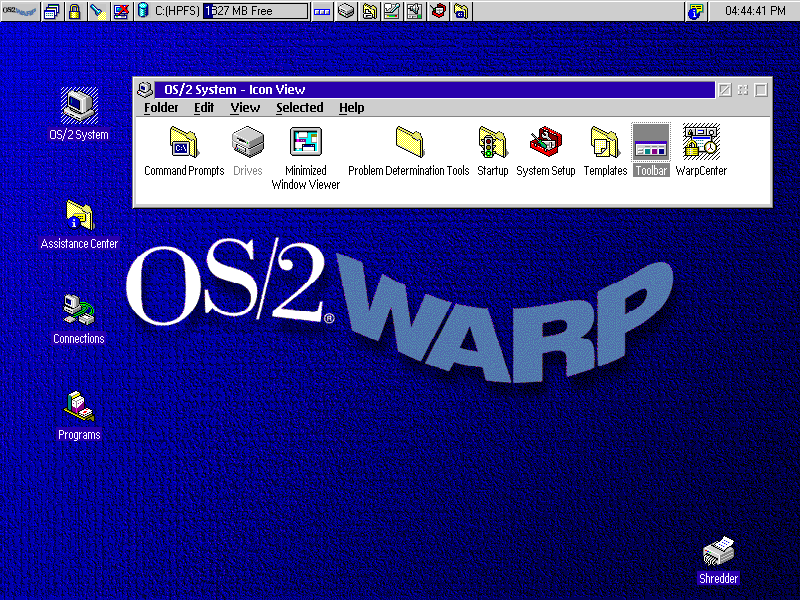
The 1990's brought us still further improvements in personal computing. Microsoft, IBM and others competed to bring mice and graphic operating environments to those not using a Mac, a competition Microsoft would eventually win with the Windows series. Modems were used to connect computers to other computers, and Bulletin Board Systems (BBS) became an early way genealogists could easily compare notes from great distances. (See, I did manage to work genealogy in here somewhere!) Access was by dial-up modem, going from 9600 bits per second (bps) to 56,000 bps by the end of the decade. Most people's early internet experience was presented by AOL and CompuServe. In 1992 I was introduced to my first digital imaging system, a prototype for the Navy that cost $250,000 and occupied a full height rack almost the size of a refrigerator. It ran a Unix operating system and had a flatbed scanner for digitizing pictures. We sent more space probes to more planets. The Voyager probes sent back fantastic images of Jupiter, Saturn, Uranus and Neptune. They're still out there, probing the edges of our solar system. Your tax dollars do sometimes get impressive results! Technology was booming by the late 90's with the first large-scale commercialization of the Internet. Dot-com companies were hot properties raising vast amounts of venture capital. Cell phones got smaller, evolving down from bag phones to bricks to candy bars. Computers got smaller, with portables being practical in the form of notebooks. We started to see the first high-speed connections with DSL and cable modem for the lucky few who lived in an area covered by them. A few TV commercials included a web address at the bottom of the screen. We spent a lot of time and money fixing the "Y2K" bug, which would have caused all manner of computer and digital clocks and calendars to revert to 1900.
2000 came along and our technology infrastructure didn't collapse. That doesn't mean it wasn't a serious issue with endless possible problems, it just means we did a very good job of fixing the problem before it happened. Cell phones got smaller yet, fitting in a pocket. High speed internet access areas got bigger. Available speeds got faster. We built a space station, and have had people on it continuously for a decade. The shuttle Columbia disintegrated on re-entry, killing seven more of our astronauts. We still haven't gone back to the moon, and I think India and China will prove more driven to make the next major accomplishments in space than we will. Cars got smarter and safer. Airbags and anti-lock brakes are common now, rather than pricey extras. Engines got computerized to increase mileage. There are now dozens of processors in a modern car, possibly more than you have in your home. Computers are faster than ever. And smaller. We went from portable notebooks to tiny netbooks to thin tablets and smartphones. The phone in your pocket now is vastly more powerful than the IBM PC of the 80's or even the PC clones of the 90's. And it's got a faster network connection. Genealogy data and vital records have been digitized and placed online in enormous quantities. What used to require extensive travel and money can now largely be done from your armchair. We are a connected, technological society.
How have you been affected by the pace of technological change? What are your fond memories of old technology? Let's discuss it in the comments below!
Amy Coffin of the We Tree blog has developed this year-long series of weekly subjects to promote regular blog updates and provide interesting ideas for discussion.